The link budget is not negotiable
Transmitter power, distance, antenna gain and the aircraft attitude decide together whether the frame arrives. Margin missing on paper becomes dropouts in the data, and dropouts at the moment that mattered.
A telemetry link is only as good as the station receiving it: antenna, receiver, decommutation, real-time display and a recording as a safety net. And more and more often, the first question is whether an antenna is still the right answer.
scroll
THE PROBLEM
The ground segment is where a campaign is won or lost in real time. Three things go wrong most often.
Transmitter power, distance, antenna gain and the aircraft attitude decide together whether the frame arrives. Margin missing on paper becomes dropouts in the data, and dropouts at the moment that mattered.
Receiving is not enough: the frame has to be decommutated, displayed and checked against limits within a fraction of a second, so the test director can call the next point, or call it off.
A tracking antenna and a telemetry receiver put live monitoring out of reach of many programmes. Satellite links are starting to change that for some flights; knowing when they apply is now part of the job.
THE ANSWER
The transmitter and the station from the same hands, and the software that makes the live picture readable.
TX-MOD on board, D.T.MUX Ground Station on the ground: one format policy end to end, one team to call when the link misbehaves.
D.T.MUX Viewer displays the telemetry in real time on the ground-station cards and replays it after the flight, on the same dashboards. LAB D.T.MUX configures the station and the airborne units, and controls the recorders over the link.
The station records everything it receives, so the ground copy and the onboard recording can be replayed side by side and the gaps in one filled from the other.
From a complete station to a receiver only, and honest advice on the link budget and on the satellite alternatives when they fit the flight.
RELATED PRODUCTS
The ground station, the transmitter that feeds it, and the airborne units it listens to.
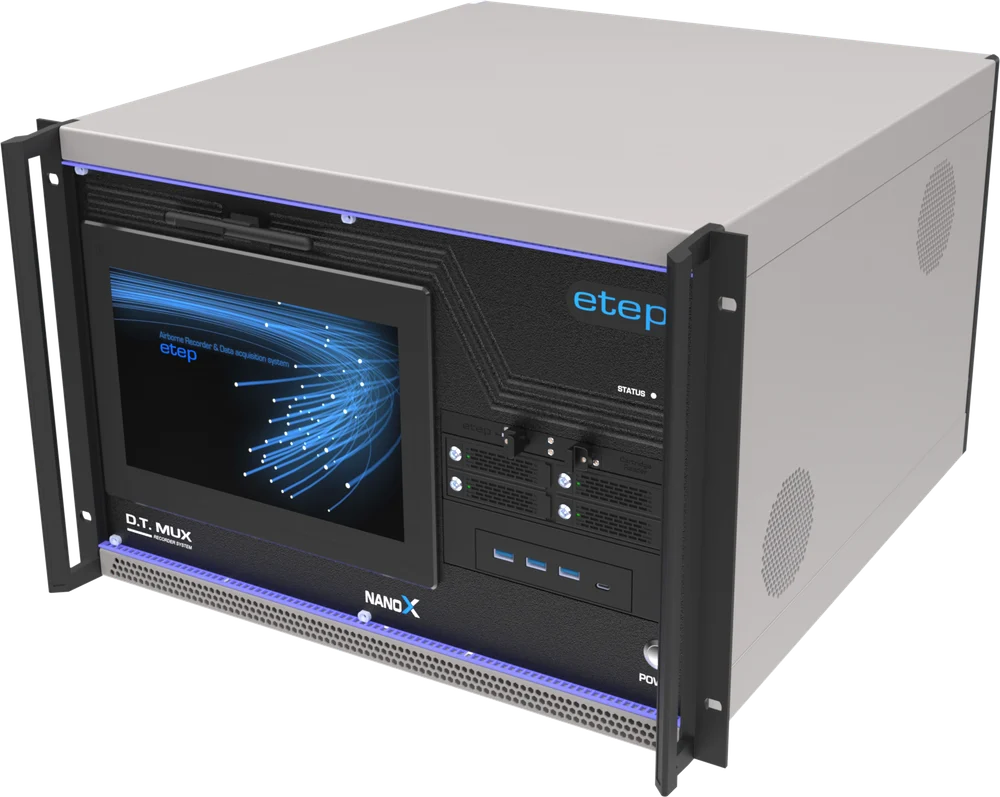
Telemetry receiver, recording, real-time viewing, replay & post-processing.
VIEW MORE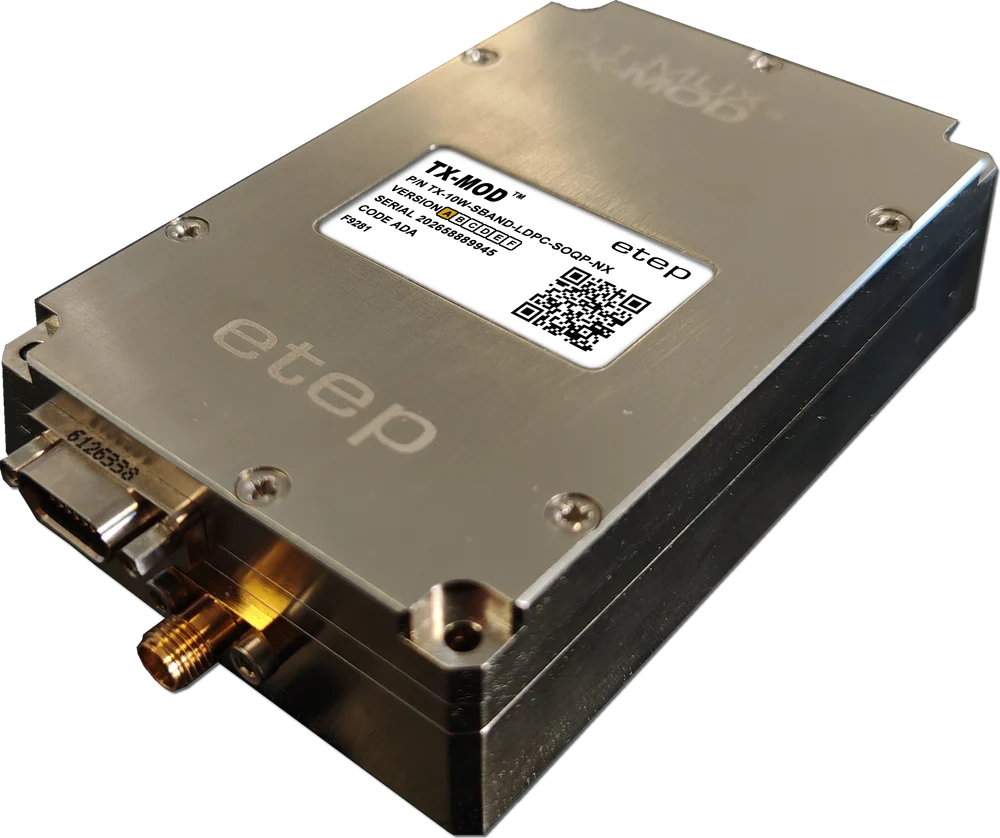
On-board telemetry transmitter, 1–20 W, S / L / C-band.
VIEW MORE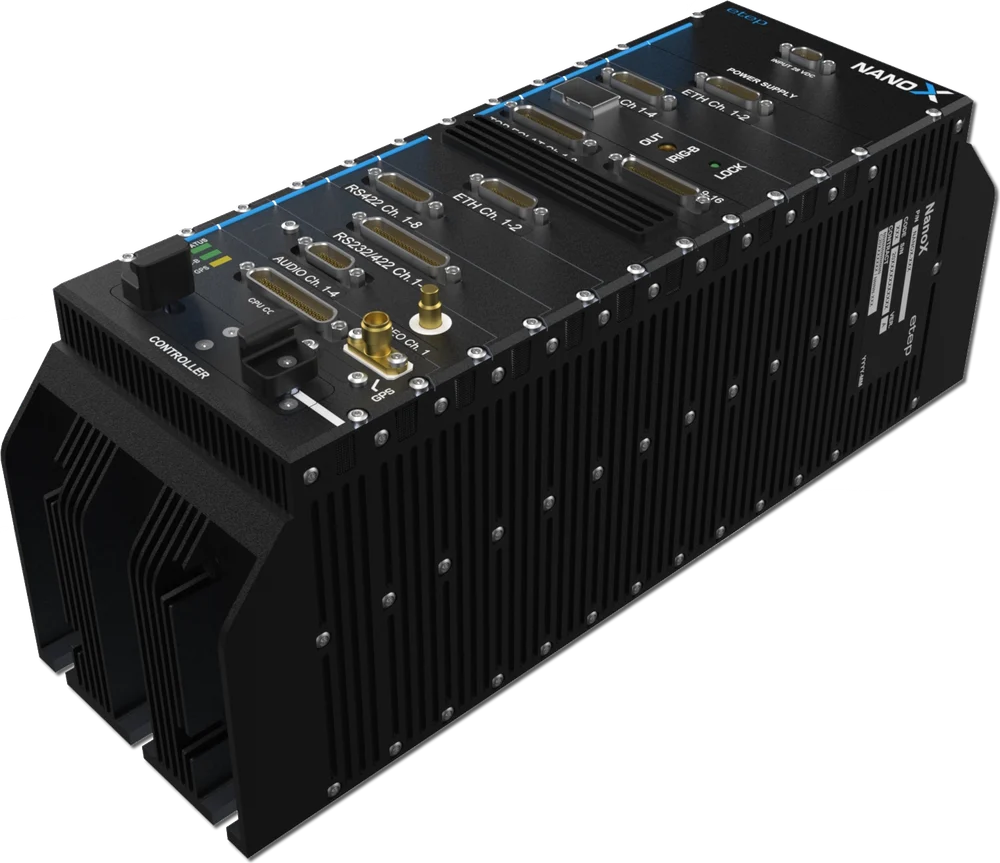
High-speed 1 Gbps acquisition / recording / replay / transmit.
VIEW MORE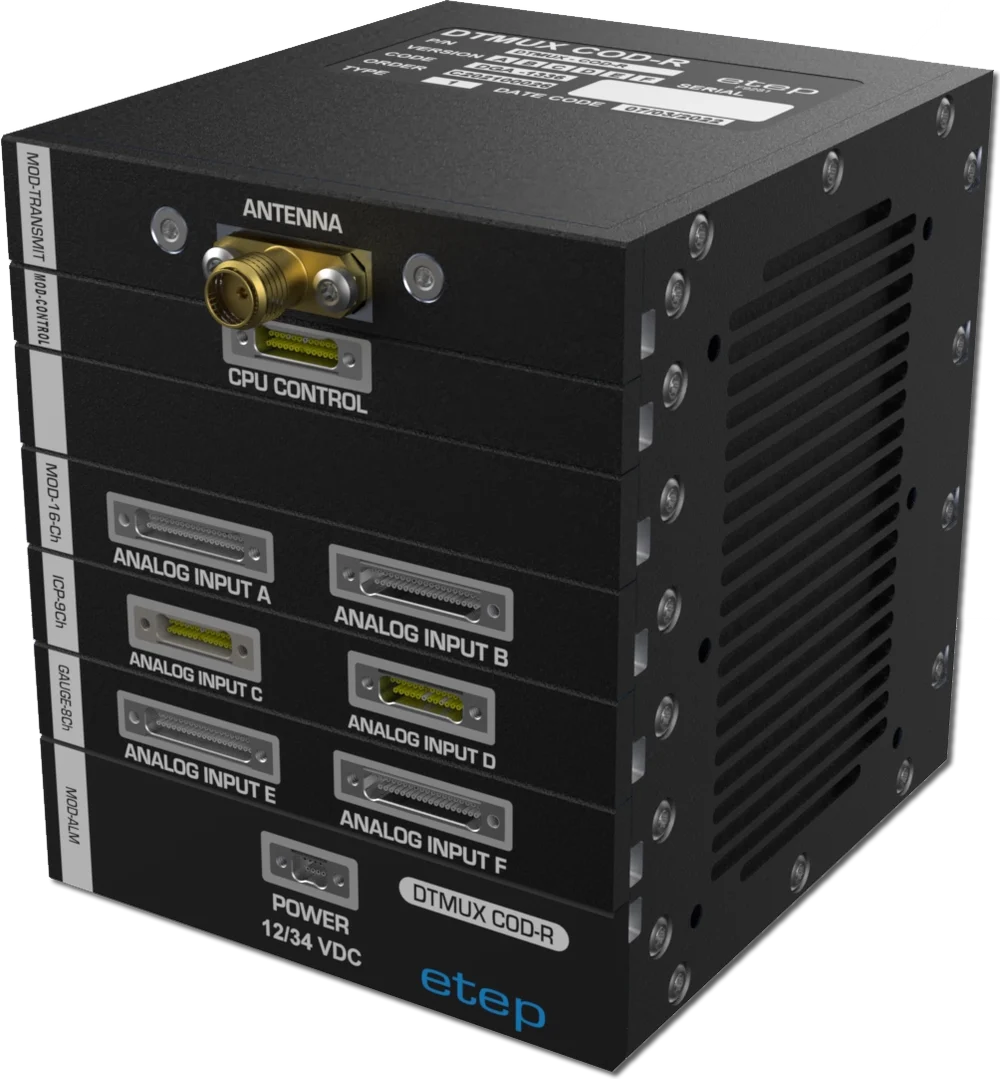
Ultra-miniature DAQ, up to 128 channels, low-latency real-time TX.
VIEW MORESOFTWARE
CASE STUDY
As a rule, we do not name our customers. The configurations are real; the identities are not.
GO FURTHER
Six stages between a radio signal and a decision, and a hard deadline: the test conductor has to be able to say continue or abort while the aircraft is still on the point.
TelemetryHow several hundred sensors end up as a single serial bit stream, how a ground station finds its way back into that stream, and how far it will actually reach — the practical mechanics of PCM/TDM telemetry.
TelemetryA low-orbit constellation will not replace the range telemetry link. It replaces the absence of a link everywhere else — and it brings something telemetry has never had: a way back up.
Design & architectureEvery other measurement can be repeated. A timing error cannot: it is discovered months later, during analysis, and it invalidates every comparison that was built on it.
FREQUENTLY ASKED
For long-range, high-rate links, yes. For some flights a satellite link now carries a reduced real-time stream at a fraction of the cost, with the full recording kept on board. Our article on satellite links sets out where the line falls today.
From reception to display, a fraction of a second: enough for a test director to react. The exact figure depends on the frame structure and on what is processed live, which is why the frame is designed with the ground team.
Yes. Both carry the same time base, so D.T.MUX Viewer aligns them and the dropouts of the link are filled from the recorder after the flight.
OTHER APPLICATIONS
Send us the ranges, the rates and the site. We come back with a link budget and a station that fits it.
Talk to an engineer →Type at least two letters. Enter opens the first result.