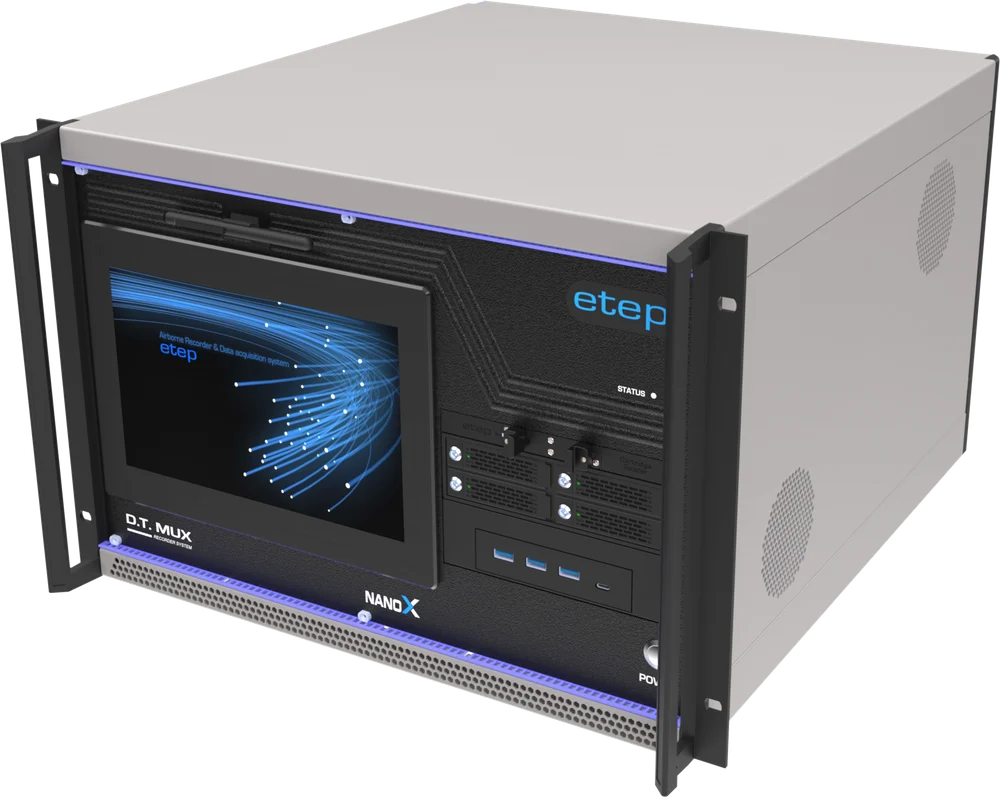
D.T.MUX Ground Station
Telemetry receiver, recording, real-time viewing, replay & post-processing
Product page → Configure and get the part number → Datasheet (PDF)
// GUIDED SELECTOR
Three questions at most. At each answer, the product that fits and the reason, with the values of the current datasheets — never a sales argument.
Follow the links: every answer leads to the next question, or to the product.
Question 1
The first split: what flies, what measures on the ground, and what receives.
Question 2
This separates the families far more than the number of channels does.
Question 3
The airworthiness requirement decides, not the size of the aircraft.
Question 3
Transmitting, more than capacity, is what separates the two flight-test recorders.
Question 3
Both record avionics buses, audio and video onto a removable cartridge, in D.T.MUX or IRIG 106 Chapter 10 format.
Question 3
ANSWER
Telemetry receiver, recording, real-time viewing, replay & post-processing
Product page → Configure and get the part number → Datasheet (PDF)
Ground Station: telemetry receiver and acquisition system, simultaneous recording of every channel, real-time viewing and replay, RAID storage up to 32 TB. It is built on the same NanoX modules as the airborne units, up to sixteen on a rear backplane.
Read the application page — ground telemetry → Compare the seven recorders → Have it confirmed by an engineer →
ANSWER
Modular acquisition, recording and telemetry, 1 Gbit/s
Product page → Configure and get the part number → Datasheet (PDF)
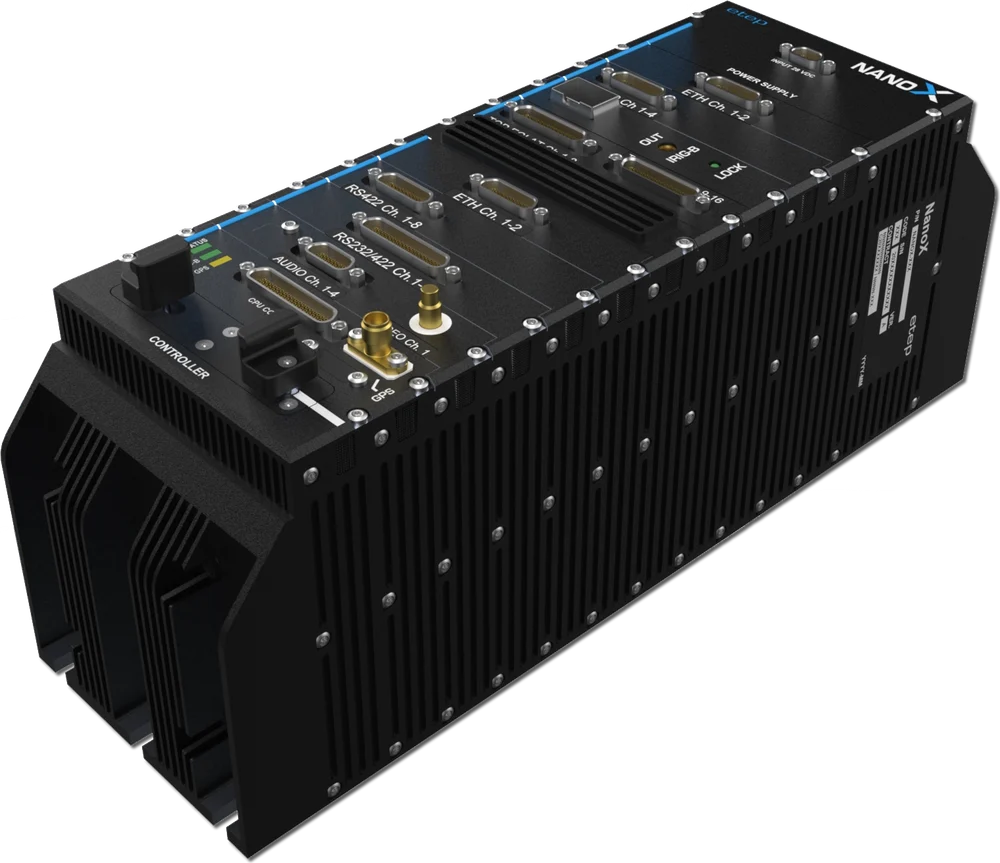
NanoX: up to sixteen acquisition modules — strain gauges, thermocouples, vibration, pressure, CAN — with 1 Gbps recording up to 2 TB and real-time streaming in Chapter 10, IENA or D.T.MUX. Several units can be placed next to the sensors on one time base, and battery modules give an hour of autonomy each.
Read the application page — ground testing → Compare the seven recorders → Have it confirmed by an engineer →
ANSWER
Crash-protected recorder, ED-112A, with its own acquisition
Product page → Configure and get the part number → Datasheet (PDF)
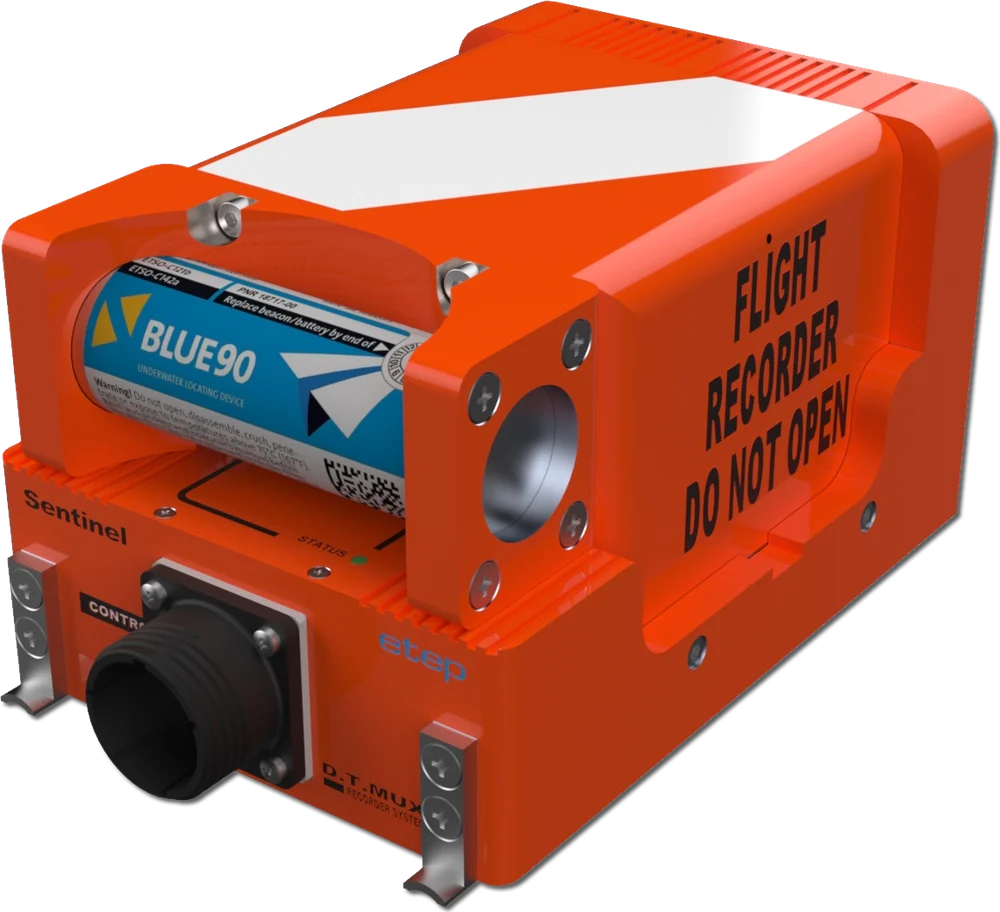
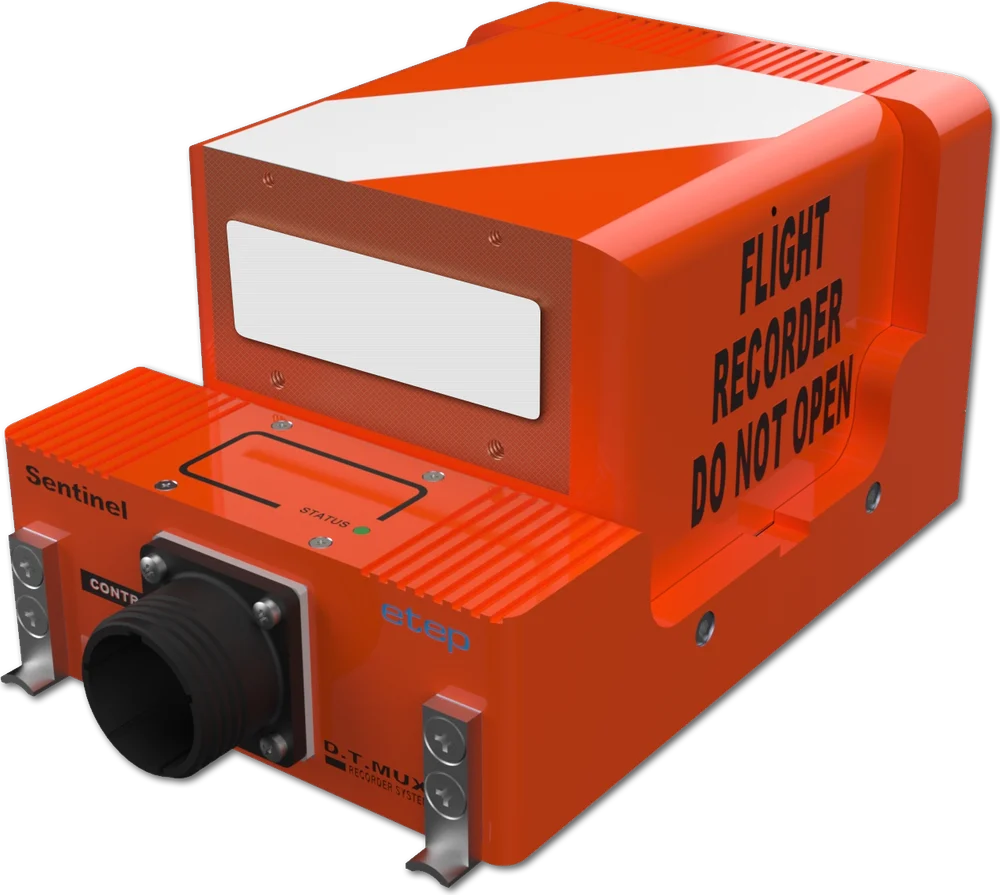
Sentinel ED-112: FDR, CVR and AIR in one crash-protected recorder that acts as its own acquisition unit — flight data, cockpit audio and Full HD or 4K images, 32 to 128 GB of protected memory, qualified DO-160 Rev G and MIL-STD-810G.
Read the application page — crash protection → Compare the seven recorders → Have it confirmed by an engineer →
ANSWER
Lightweight crash-protected recorder, ED-155
Product page → Configure and get the part number → Datasheet (PDF)
Sentinel ED-155: the same fully integrated recorder and acquisition unit, to the lightweight specification, about 3.30 kg — for general aviation, UAVs and platforms where the full ED-112A requirement does not apply.
Read the application page — crash protection → Compare the seven recorders → Have it confirmed by an engineer →
ANSWER
Crash-survivable memory unit, 16–128 GB, 3 400 g shock
Product page → Configure and get the part number → Datasheet (PDF)
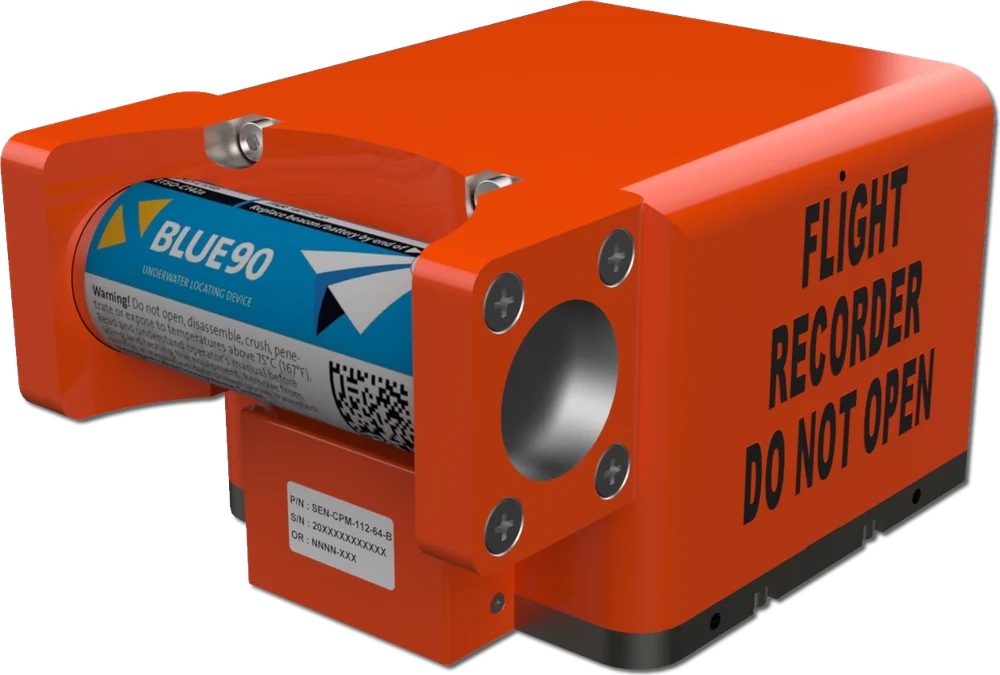
Sentinel CSMU: the crash-survivable memory unit alone, 16 to 128 GB in a titanium enclosure — 3 400 g impact, 1 100 °C fire, 30-day immersion, to ED-112A or ED-155 — to integrate into your own equipment.
Read the application page — crash protection → Compare the seven recorders → Have it confirmed by an engineer →
ANSWER
Crash-protected recorder, ED-112A, with its own acquisition
Product page → Configure and get the part number → Datasheet (PDF)
Lightweight crash-protected recorder, ED-155
Product page → Configure and get the part number → Datasheet (PDF)
Both are the same integrated recorder, FDR, CVR and AIR acting as its own acquisition unit, qualified DO-160 Rev G and MIL-STD-810G. Only the crash-protection specification differs: ED-112A for certified aircraft, ED-155 for platforms where that full requirement does not apply.
Worth knowing: Tell us the aircraft and its certification basis: which of the two applies is an airworthiness answer, and we would rather give it before you write your specification.
Read the application page — crash protection → Compare the seven recorders → Have it confirmed by an engineer →
ANSWER
Modular acquisition, recording and telemetry, 1 Gbit/s
Product page → Configure and get the part number → Datasheet (PDF)
NanoX: up to sixteen stackable acquisition modules, 1 Gbps recording and transmitting in a single unit where other solutions need two or three, transmitter module 5 to 20 W in S, L or C band, real-time streaming in D.T.MUX, IRIG 106 Chapter 10 or IENA.
Read the application page — flight test → Compare the seven recorders → Have it confirmed by an engineer →
ANSWER
Modular acquisition, recording and telemetry, 1 Gbit/s
Product page → Configure and get the part number → Datasheet (PDF)
NanoX without its transmitter module: concentrator and recorder in one stackable device, up to sixteen modules, 64 GB to 2 TB, IRIG 106 Chapter 10, analog, digital buses and video on one time base.
Worth knowing: The transmitter can be added later without touching the instrumentation. Its compact predecessor, the NanoS2, is no longer sold; units in service stay supported.
Read the application page — flight test → Compare the seven recorders → Have it confirmed by an engineer →
ANSWER
Ultra-miniature DAQ, up to 128 channels, low-latency real-time TX
Product page → Configure and get the part number → Datasheet (PDF)
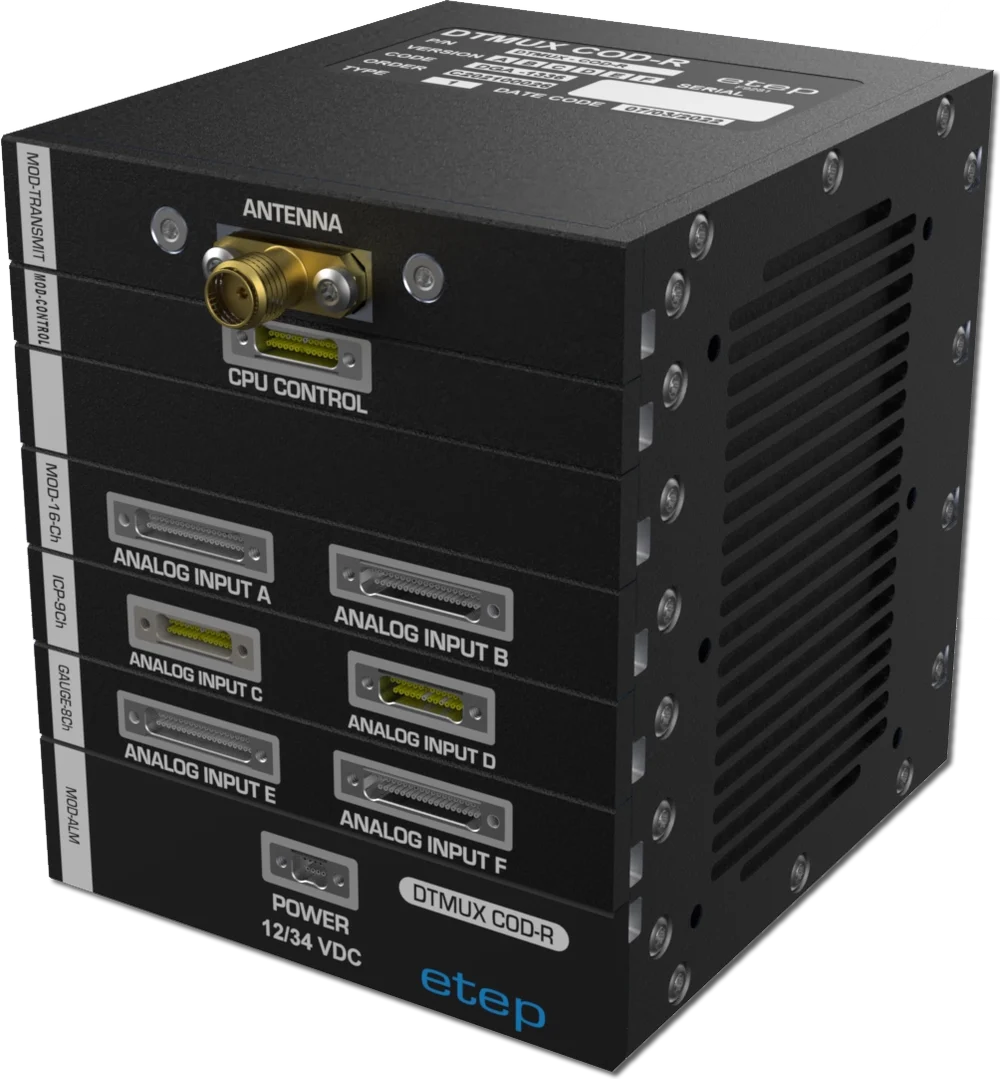
COD-R: ultra-miniature acquisition, up to 128 channels in real time with low-latency transmission, an S-band transmitter and an optional internal SSD. Its job is transmission, which is why it is not in the recorder table.
Read the application page — flight test → Compare the seven recorders → Have it confirmed by an engineer →
ANSWER
1 kg mission recorder, buses and video
Product page → Configure and get the part number → Datasheet (PDF)
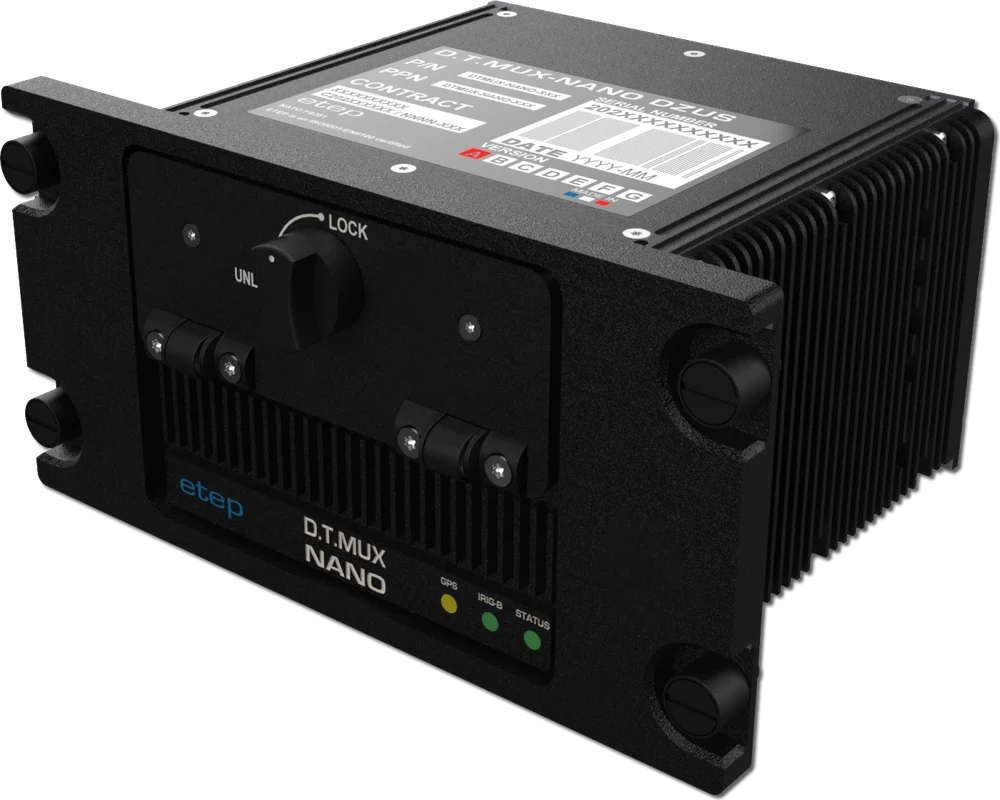
Nano: one kilogram, quick-access removable SSD from 64 GB to 2 TB, 1× 4K UHD plus 2× HD and 2× SD video channels alongside MIL-STD-1553, ARINC 429/717/573, PCM, CAN and Ethernet, with encryption, secure erase and physical destruction options.
Worth knowing: If the recorded data must also survive an accident without the recorder being certified, the Nano takes a crash-proof cartridge (CP option).
Read the application page — mission recording → Compare the seven recorders → Have it confirmed by an engineer →
ANSWER
High-capacity mission recorder, 4K 60 fps
Product page → Configure and get the part number → Datasheet (PDF)
M: removable cartridge from 64 GB to 16 TB, Ultra HD 4K 60 fps or Full HD in H.264 / H.265, conditioned analog inputs, built-in file server (FTP, NFS, SMB), ARINC 404 rack or cockpit DZUS mounting, about 2 kg.
Worth knowing: The M also takes the crash-proof cartridge (CP option) when the data has to survive an accident.
Read the application page — mission recording → Compare the seven recorders → Have it confirmed by an engineer →
ANSWER
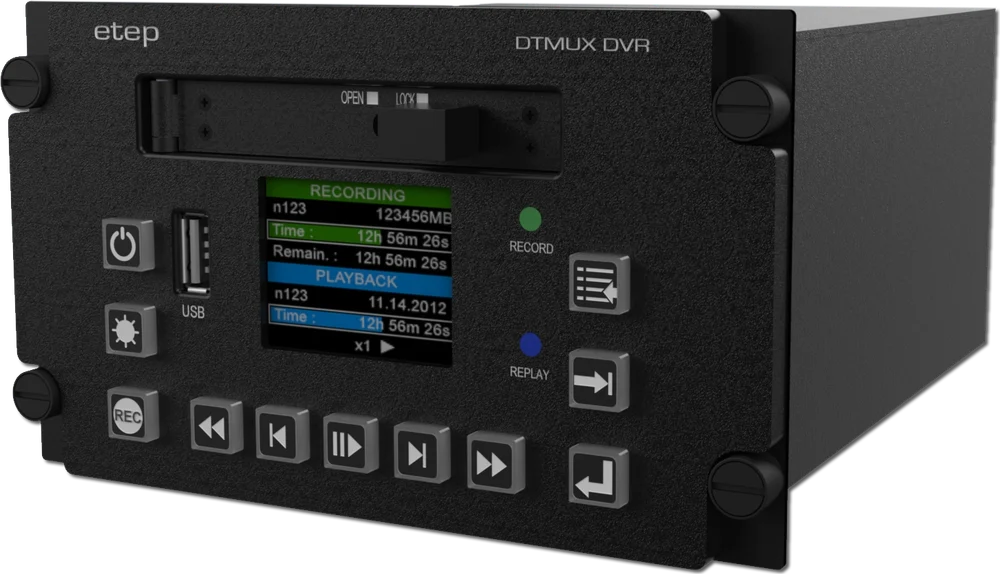
DVR: records and replays two HD or 4K channels simultaneously, or records up to four, in H.264 / H.265 — over 20 hours of capacity, HD-SDI in and out, NVG-compatible front panel, DZUS mount, 2 kg. Extraction by removable SSD, USB or SD card.
Read the application page — onboard video → Compare the seven recorders → Have it confirmed by an engineer →
ANSWER
4K airborne IP camera with mic, GPS overlay and PoE
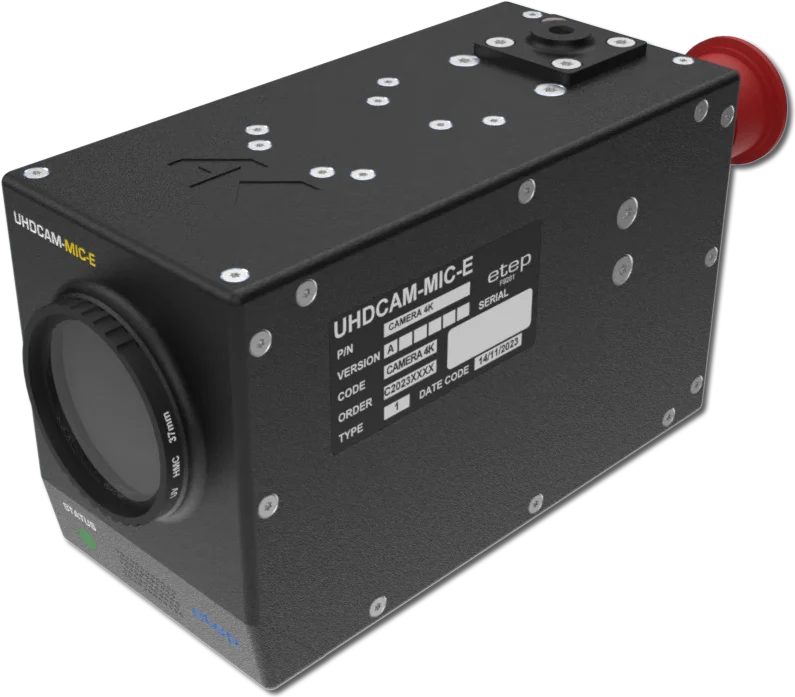
The Ultra HD camera is a complete airborne source: 4K up to 30 fps or Full HD up to 60 fps, area microphone to ED-155A / ED-112B, GPS overlay, image stabiliser, PoE, about 750 g, DO-160 qualified. Add the DVR when several channels have to be recorded and replayed on board.
Worth knowing: Tell us which interface the aircraft offers: the camera is IP with PoE and records natively on its own SD card, the DVR records HD-SDI. We confirm the combination before you order.
Read the application page — onboard video → Compare the seven recorders → Have it confirmed by an engineer →
That happens often, and it is the interesting part. Describe the aircraft, the streams to record and the mission duration: an engineer answers, and says why.
Talk to an engineer →Type at least two letters. Enter opens the first result.