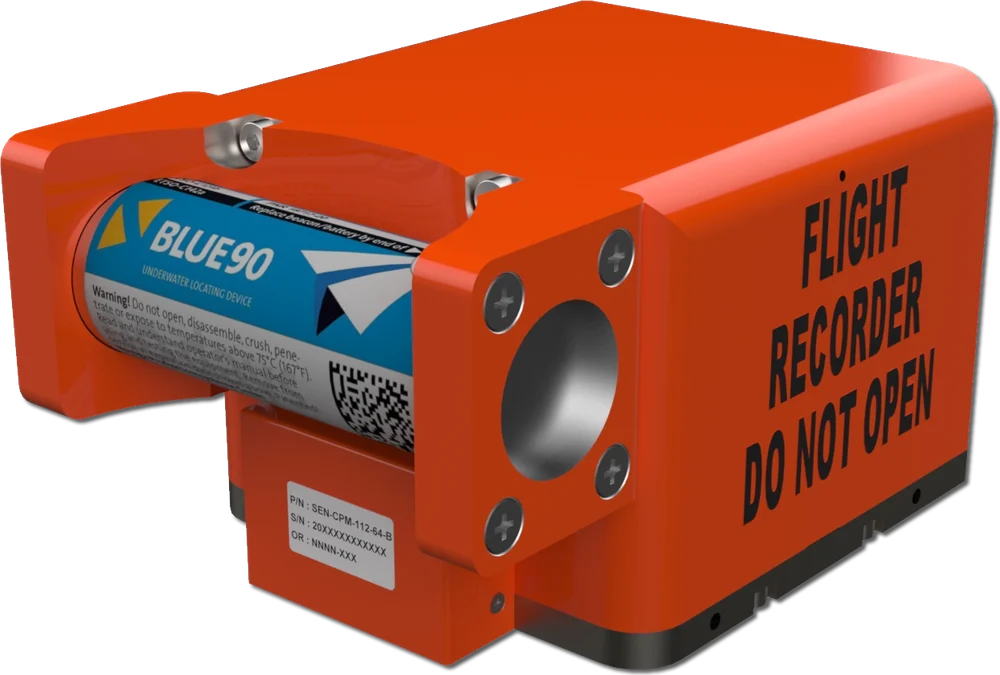
Protecting the data that has to survive the crash

A crash-protected recorder is not a rugged recorder with extra armour. It is an object whose only reason to exist is to be read after the worst has happened. Fire, shock, crushing, immersion: ED-112A and ED-155 set the bar, and the rest of the aircraft should not have to pay for it.

scroll

Stainless steel / titanium shell High-temperature insulation Thermal block SOLID-STATE MEMORY IMPACT PENETRATION CRUSH CRUSH ULB 37.5 kHz FIRE IMMERSION
What the protected memory unit is asked to survive, in the order the standards test it.
Standards
ED-112A · ED-155
Shock
3 400 g
Protected memory
16 to 128 GB
Streams
data · audio · video

THE PROBLEM

The standard first, then the box

The recorder is a small part of a certified installation. Most of the difficulty is choosing the right class of protection for the aircraft, then fitting three data streams into a memory that costs weight and money per gigabyte.

ED-112A or ED-155: two different aircraft

ED-112A is the full standard for aeroplanes and helicopters; ED-155 is the lightweight one written for small aircraft and unmanned systems. The class you pick sets the mass, the cost and how much of the installation has to be demonstrated.
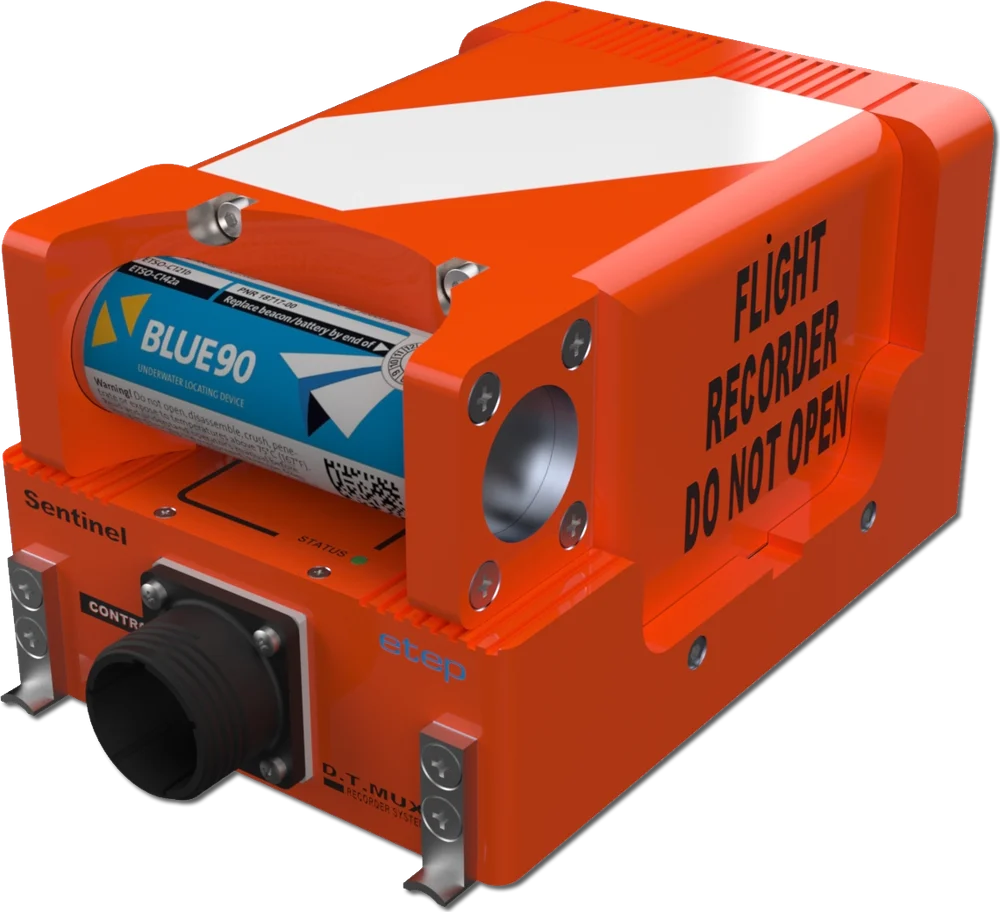
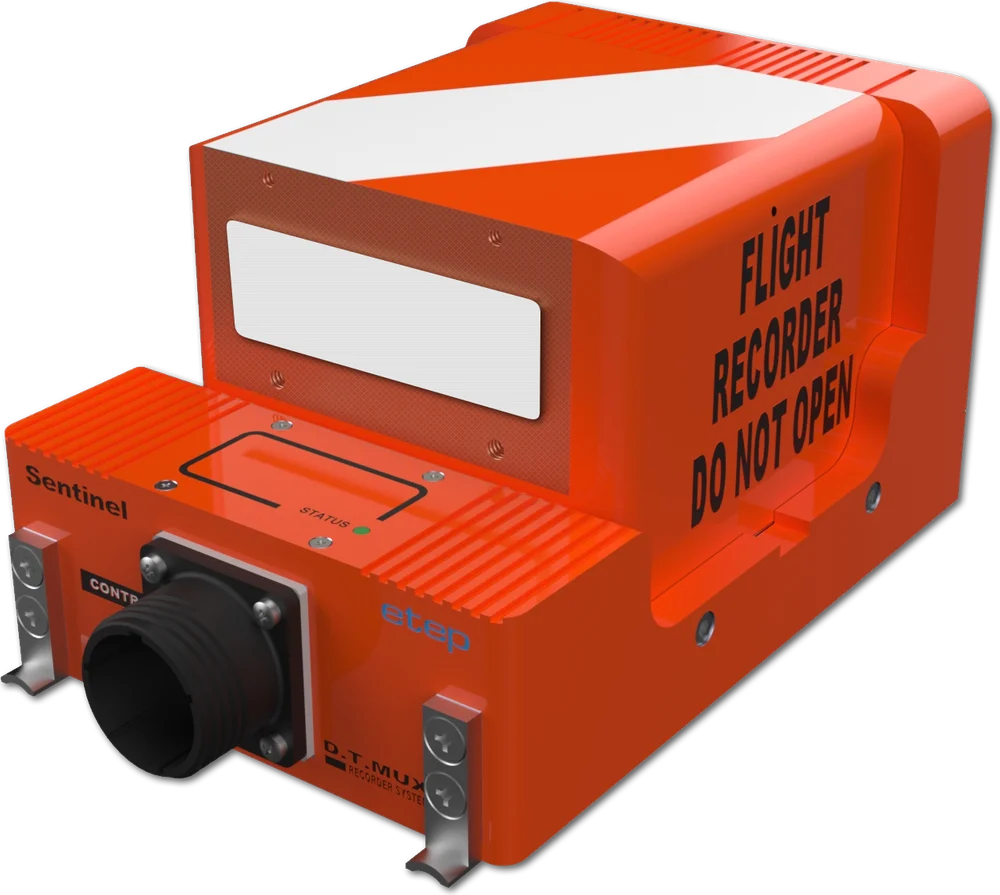
Three streams in one protected unit

Flight data, cockpit audio and now video all compete for the same crash-survivable memory, each with a minimum duration to keep. The compression and the priority order have to be decided, not left to defaults.

Retrofit without rewiring

On an aircraft already in service the recorder must take the buses that exist, hold up through a power loss, drive a locator beacon and offer a controlled erase, all without turning the retrofit into a redesign.

THE ANSWER

What ETEP brings

Recorders that meet the standard without becoming dead weight the rest of the time.

One range across both standards

Sentinel ED-112 and Sentinel ED-155 as complete recorders, the Sentinel CSMU as a bare crash-survivable memory unit for integrators who build their own electronics around it.

A recorder that also works every flight

The Sentinel acquires and records data, audio and 4K video in IRIG 106 Chapter 10 or D.T.MUX format, so the same unit serves the daily debrief and the day nobody wants to think about.

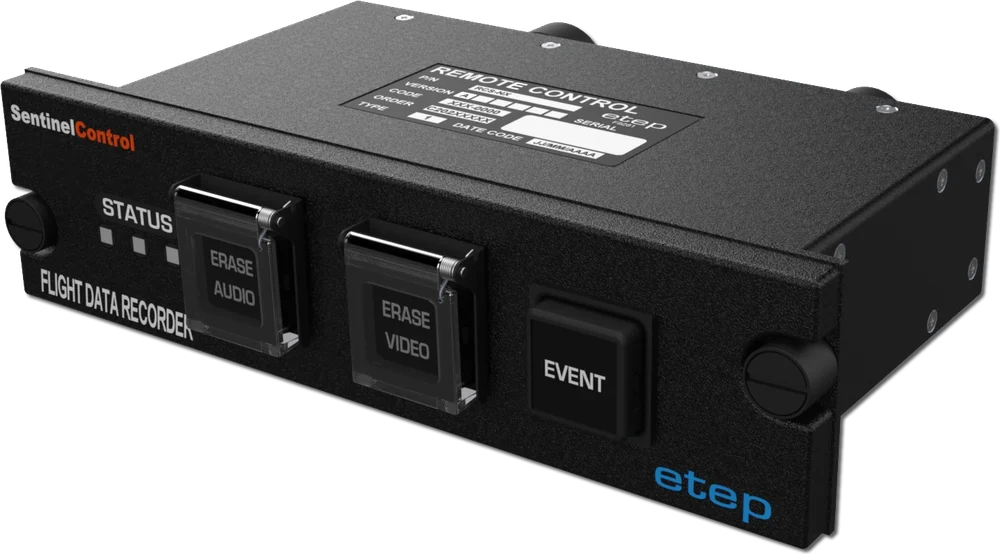
Status, erase and event marking within reach

The Sentinel Remote Control puts recorder status, secure erase and event marking in the cockpit, without touching the protected unit.

Read what was recorded, even when it ended badly

D.T.MUX Viewer replays every stream in step; D.T.MUX Recover rebuilds a recording that was cut by a power loss instead of writing it off.

FREQUENTLY ASKED

What we get asked first

ED-112A or ED-155 for my aircraft?

ED-112A is the reference for aeroplanes and helicopters, ED-155 the lighter standard written for small aircraft and unmanned systems. The choice follows the aircraft category and the authority in charge of the installation; we give you the comparison, the airworthiness office gives you the answer.

What happens to the recording if power is lost in flight?

The file stays readable: the D.T.MUX format is designed so that an interrupted recording is not a lost one, and D.T.MUX Recover rebuilds what a cut left incomplete. Back-up power for the recorder itself is an installation decision, taken with the airworthiness office.

Can the data be erased on the ground?

A secure erase is available from the Sentinel Remote Control, for operators who must not leave data on board between missions.

A crash-protected recorder to specify?

Send us the aircraft type and the streams to keep. We come back with the class of protection, the memory size and the installation points to watch.

Talk to an engineer  →