Onboard video that stays in step with the data

A camera is quickly fitted to an aircraft. Video synchronised to the millisecond with the parameters, compressed without destroying what you need to read in it, and recorded without saturating the link is another trade altogether.

scroll

Two rates, one clock: GOP — only the I-frame stands on its own I P P P P P P P I P P P P P P P video, 25 fps — one I-frame every eight frames parameters, 1 kHz t0 t0 + 320 ms One frame is 40 ms at 25 fps. Half a frame of error is 20 ms — visible against a 1 kHz parameter. Time-stamp at capture, not at the encoder output: compression reorders frames, acquisition does not.
What one video stream costs against the rest of the acquisition. The camera is small; its bit rate is not.
Resolution
4K · Full HD
Compression
H.264 · H.265
Overlay
GPS · time
Cabling
PoE · HD-SDI

THE PROBLEM

The picture is the biggest thing on board

Video changes the arithmetic of an installation: one camera weighs more, in bits, than a thousand sensors. Three consequences follow.

Video eats the bit rate

A single 1080p stream can outweigh the whole parameter set. Resolution, frame rate and compression have to be chosen for what the image is for, and the decision of what goes down the link and what stays on board has to be taken again.
Synchronising the image with the measurement

A frame timestamped at the recorder rather than at the camera lies by tens of milliseconds, and a debrief built on it draws the wrong conclusion. Timing has to be taken at the source, on the same clock as everything else.

Cameras where cameras do not belong

Vibration, temperature, sun in the lens and long cable runs are the daily life of an airborne camera. Power over the same Ethernet cable and several viewpoints on one network keep the installation sane.

THE ANSWER

What ETEP brings

A camera made for the aircraft, recorders that treat video as data, and one clock for both.

A 4K IP camera made for the airframe

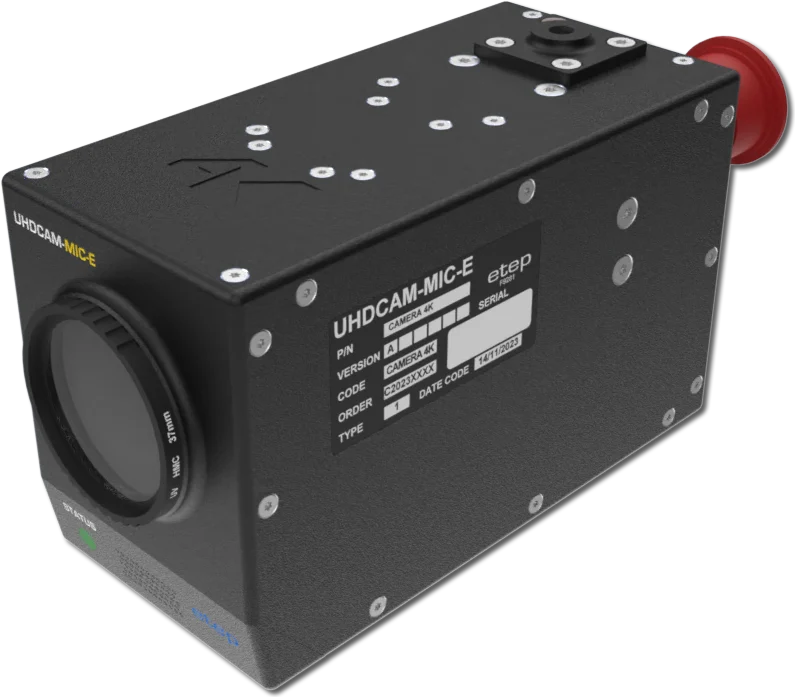
Ultra HD camera with microphone, GPS and time overlay, powered over Ethernet, qualified for the environment it will live in.

Recorders that treat video as data

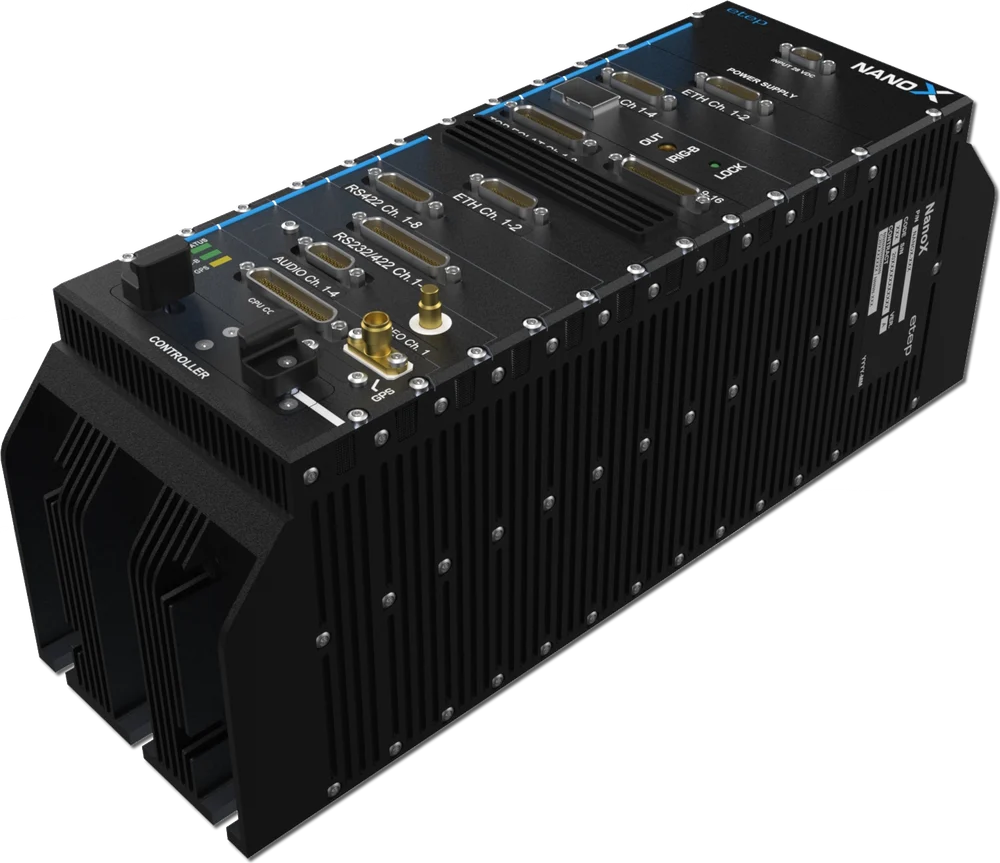
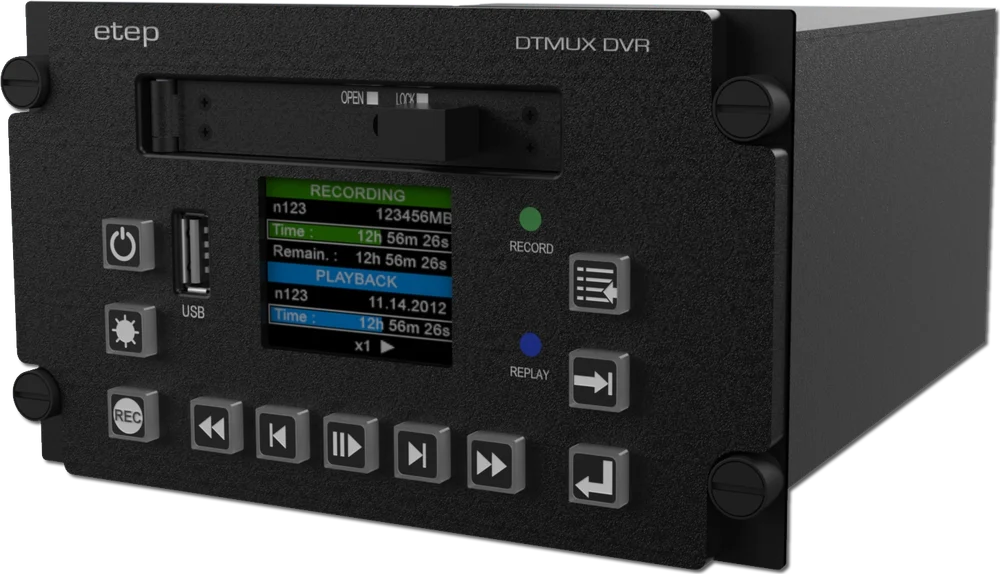
The DVR for video-first missions up to 2 TB, NanoX and the mission recorders when video rides alongside buses and sensors, the Sentinel when it has to survive a crash.

One time for the image and the numbers

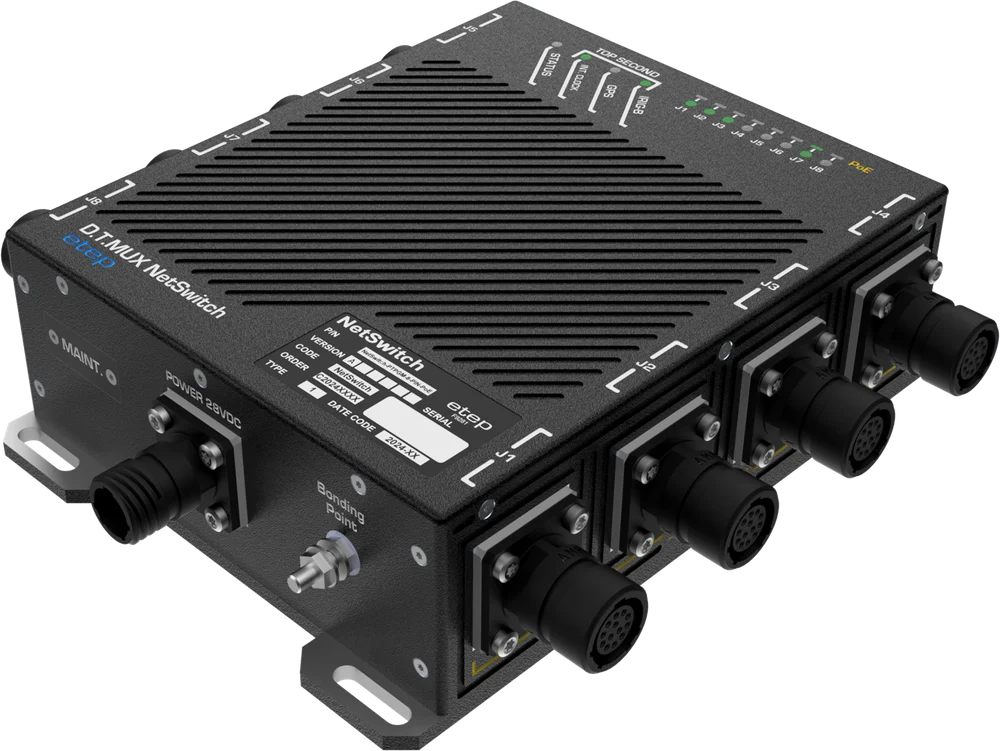
PTP over rugged NetSwitch units puts camera, acquisition and recorder on one clock; D.T.MUX Viewer replays video and parameters together, frame against sample.

Distributed where it is needed on board

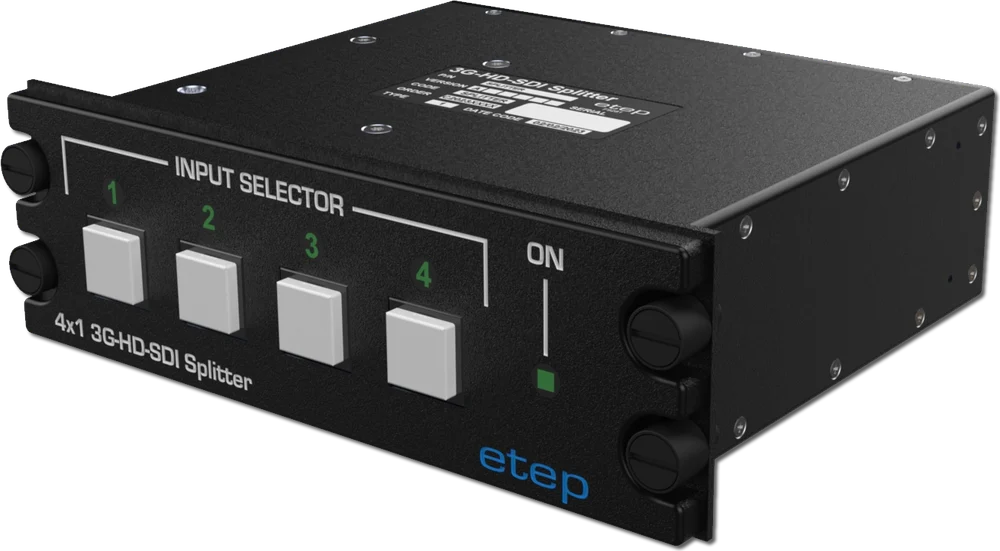
VSplit takes four HD-SDI sources to one or several displays, so the crew sees what the recorder sees.

FREQUENTLY ASKED

What we get asked first

How many cameras can one installation carry?

The limit is bit rate and storage, not ports: each camera adds a stream to size against the recorder and the link. Several viewpoints on one rugged Ethernet switch are routine; the arithmetic is in our sizing article.

What bit rate should I budget?

It depends on resolution, frame rate and what the image is for. As a rule of thumb, a single HD camera with good compression costs more than the entire parameter set of a typical installation, which is why video is decided first.

Can video and parameters be replayed together?

Yes, that is the point of the common time base. D.T.MUX Viewer plays the video against the parameter curves, frame by frame, and exports standard video files when they are needed elsewhere.

Video to add to an installation?

Tell us how many viewpoints, at what quality, and what the images are for. We reply with the bit rate, the storage and the recorder that fits.

Talk to an engineer  →